
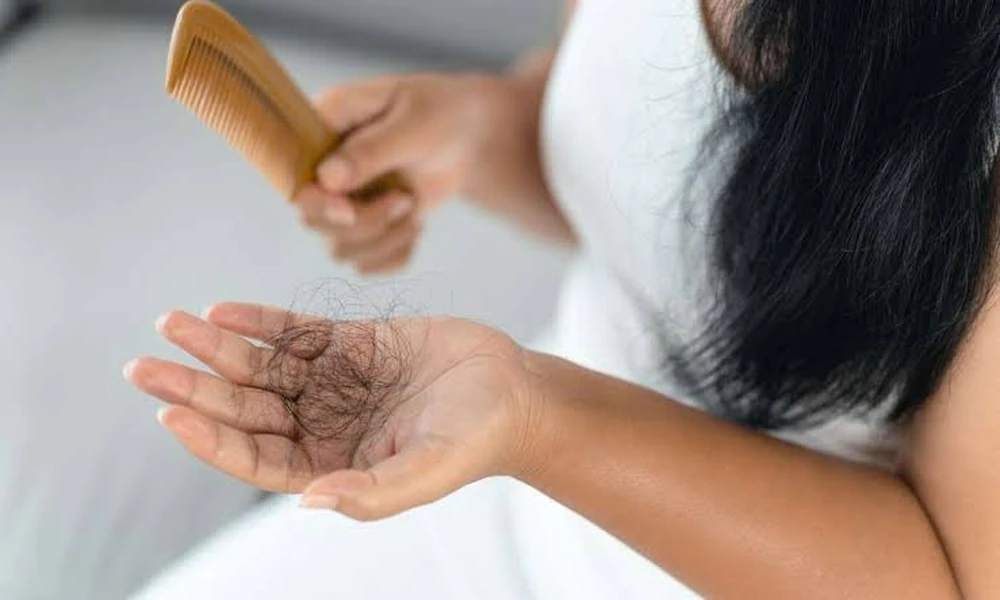
Finding extra hair on a brush, pillowcase, or shower floor can make it seem as though all hair loss is the same. In reality, a noticeable decrease in fullness can happen for different reasons. Sometimes whole hairs are shedding from the scalp. In other cases, strands are breaking before reaching their normal length.
Knowing the difference does not provide a diagnosis, but it can help you describe what is happening more accurately and decide whether simple hair-care changes are enough or a professional evaluation makes sense.
Why Shedding and Breakage Can Look Similar
Both shedding and breakage can leave more hair in your hands after washing or styling. They may also make a ponytail look thinner or create the impression that overall density has changed.
The important difference is where the problem occurs.
With shedding, complete hairs are released from the scalp as part of the hair-growth cycle or because that cycle has been disrupted. Breakage occurs along the hair shaft, so part of the strand remains attached while another part snaps off.
A mirror alone may not always reveal which process is occurring. Looking at the pattern, length of loose strands, styling habits, and condition of the scalp can provide better clues.
Clues That May Point Toward Hair Shedding
Shedding often becomes noticeable because more full-length strands appear during washing, brushing, or throughout the day.
The change may seem diffuse rather than concentrated in one damaged section. A person might notice that a part appears wider, a ponytail feels smaller, or more scalp is visible than before.
Timing can also matter. Changes in the hair-growth cycle can follow events such as significant illness, physical stress, major life changes, or other health-related factors. Because there are many possible explanations, however, noticing a possible trigger should not be treated as proof of the cause.
Another important clue is persistence. A few unusually heavy wash days do not automatically indicate a hair disorder. A continuing change in density or shedding pattern deserves more attention than an isolated episode.
Keeping several weeks of simple observations can be more useful than repeatedly counting individual hairs.
Signs That Breakage May Be Playing a Role
Breakage tends to leave strands of noticeably different lengths. Instead of losing mainly full-length hairs, you may see shorter pieces around the sink, clothing, shoulders, or brush.
The remaining hair can also look uneven, frizzy, or rough.
Frequent heat styling, chemical processing, aggressive detangling, or hairstyles that place repeated tension on the hair may contribute to physical damage. That does not mean every person who colors, straightens, braids, or heat-styles their hair will experience significant breakage. Hair type, technique, frequency, and existing damage all matter.
Gentler handling can therefore be a sensible first step when breakage seems likely. Reducing unnecessary pulling, being careful while detangling, conditioning appropriately, and limiting practices that repeatedly stress fragile strands may help prevent additional damage.
If those changes do not improve the problem, another cause may need to be considered.
When It Makes Sense to Get the Scalp Evaluated
Sometimes the pattern is not clearly shedding or breakage. You may have thinning concentrated around the temples or crown, a widening part, a distinct patch, or changes that continue despite gentler hair care.
The scalp can offer additional clues. Persistent itching, burning, tenderness, scaling, redness, or other noticeable scalp changes accompanying hair loss deserve attention because hair problems are not always confined to the strand itself.
Professional evaluation is also useful when the change is sudden, progressing, difficult to explain, or causing significant concern.
For someone looking specifically for local dermatologic care, a search such as hair loss specialist scarsdale ny can help identify practices that evaluate hair and scalp concerns. More important than the wording of the search, however, is finding a clinician who assesses the pattern of loss, scalp condition, relevant health history, and other possible contributors before recommending treatment.
That diagnostic step matters because different types of hair loss do not necessarily respond to the same approach.
What to Track Before an Appointment
You do not need an elaborate hair diary, but a few observations can make a consultation more productive.
Note approximately when the change began and whether it appeared gradually or suddenly. Consider whether the issue seems concentrated in one area or affects the scalp more evenly.
It can also help to record recent changes in medications, health, diet, major stressors, hairstyling routines, chemical treatments, or other circumstances that occurred before the problem became noticeable. Do not stop prescribed medication based only on a suspicion that it may be related; medication concerns should be discussed with the prescribing clinician.
Photographs taken in similar lighting every few weeks may also provide a more objective view of whether density or the hairline is actually changing.
Finally, mention scalp symptoms even if they seem unrelated. Itching, discomfort, flaking, tenderness, and visible changes can be useful information during an evaluation.
Avoid Treating Every Hair Problem the Same Way
One of the easiest mistakes is reaching for a product before understanding what is happening.
A shampoo cannot correct every cause of thinning, just as reducing heat styling cannot address every form of shedding. Likewise, a treatment that is appropriate for one type of hair loss may be unnecessary or unsuitable for another.
The more useful first question is not, “What product should I buy?” but, “Am I dealing with shedding, breakage, a change in hair-growth pattern, or something affecting the scalp?”
You may not be able to answer that question completely on your own-and that is precisely when an evaluation becomes useful.
Conclusion
Hair shedding and hair breakage can create similar visible changes, but they occur for different reasons and may require different responses.
Pay attention to the length and pattern of loose hairs, changes in overall density, scalp symptoms, and whether gentler hair care improves the situation. When thinning is persistent, sudden, localized, accompanied by scalp changes, or simply difficult to understand, professional evaluation can help clarify what is happening before you commit to a treatment approach.
Understanding the problem first is far more useful than treating every loose strand as the same kind of hair loss.
